Thursday, December 19

Weekender Books August - November - YOUNG ADULT


Here is the long promised second post of the August-November books I wanted to write about. The books I have selected deal with the themes of guilt, loss, redemption, mental health, friendship, death and love. They all tell the themes through very intense experiences: losing someone close by suicide, getting killed in a car accident and being in a mental institution.

Here they are, in no particular order other than the one I read them in:


Girl Running, Boy Falling - Kate Gordon

The Shiny Guys - Doug MacLeod

Before I Fall - Lauren Oliver
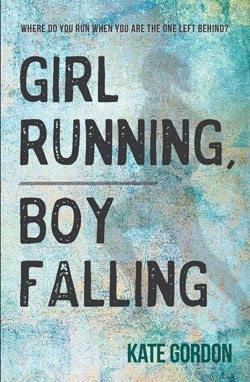


Girl Running, Boy Falling 

by Kate Gordon (Rhiza Press, 2018)

This story is told from the perspective of sixteen-year-old Therese. She's called Tiger by her aunt, with whom she lives in a small town on Tasmania. To her friends she is Resey. The boy she loves calls her Champ. She’s a lot of different things for a lot of different people and she's fine with it. 

Therese deals with more loss and abandonment in her young life than most - her parents both have left her behind while embarking on their own adventures and new lives without her and Therese's only 'contact' are her letters about her life (I'm not even sure if she's sending them off), which made for a sad start.

But when the boy she loves falls without warning and commits suicide, the sense of abandonment and loss is overwhelming and Therese has to find ways to cope with this new kind of grieving for a life lost, once again. 
Girl Running, Boy Falling is so much more than a story about a girl and boy. It raises the questions of the impact of suicide on those left behind and the way the brain and the heart can or cannot deal with that kind of trauma.The book took me on a journey of life's emotions - grief, heartbreak, loss, despair and love, told in a beautiful language. A deeply moving book that will stay with me.

๐ŸŒบ๐ŸŒป๐ŸŒผ๐Ÿ๐ŸŒธ
Recommendation: A book that's hard to put down. Best read with a cup of tea, a box of tissues and a lit candle for all the loved ones lost.


The Shiny Guys 
By Doug MacLeod (Penguin Books 2012)

Fifteen-year old Colin gets visits from the shiny guys. They don't speak but Colin reads their thoughts. They've come in his life to stay because they want him to pay for the terrible things he's done. Particularly his lying about the disappearance of his beloved younger sister, Briony, who fell victim to an unspeakable crime.

Colin is committed to a psychiatric ward after he takes an overdose of his mother's sleeping pills, sometime after the horrible event shook the family apart. He makes friends in this new world of his. 

The story is set in the mid 1980s, around the time when I read Ken Kesey's One Flew Over The Cuckoo's Nest and Kafka's Metamorphosis (the latter, unsurprisingly, appears in the story) and this story was very evocative of those older stories without replicating them, but adding a new voice.  

While the overall story about the crossing of the fine line between not telling the truth, the oppression of guilt and the loss of a sense of reality was very dark and confronting, there are some funny interactions between Colin and the other patients, which underpin the idea of closed wards being a haven, a place where everyone's free to forge their own reality without judgement from the other patients, at least. 

Writing about various mental illnesses is not an easy task. This book managed to present different forms of mental coping mechanisms to survive their own reality through the characters of Colin, Mango and Anthea. The book's style mirrors these differences and nuances and demands the reader's full attention to detail, as it weaves in and out of reality, dream-like landscapes and SciFi worlds. A challenging but equally rewarding book.

๐Ÿœ๐Ÿพ๐Ÿพ๐Ÿพ๐Ÿ˜ฎ
Recommendation: An equally challenging and rewarding book that invites a look into mental illness as a coping mechanism and escape into an alternative reality. 


Before I Fall 
By Lauren Oliver (Hodder 2010)

Samantha is a popular high school senior in a small town in Connecticut who dies in a terrible accident. She gets to re-live variations of her last day with the benefit of hindsight and a good dose of self-reflection. We learn that Samantha, also narrator of the story, is part of the worst group of bullies in her school, where she is more of the average follower, than the leader.

The What If scenario is compelling: wouldn't it be great if we got a second chance to undo our mistakes or better never commit them in the first place?

Samantha gets seven takes. Each repeated day starts in the morning until she realises that by making even the slightest changes towards kindness, she may steer events towards a more empathetic environment and ultimately a better version of herself.

The book made me think about cultural discrepancies between the reader and the author like no other fiction book before. It was clearly written for an American audience, first and foremost, and there's nothing wrong with that. Although I have visited the States and had American friends growing up (and yes, I do watch American movies, too), I was taken aback by the accepted culture of 'mean girls' as part of the high school experience here. It took me a while to get into this world of spite and meanness beyond reason and I really couldn't relate to any of the characters -- bullies and victims alike. That's not to say that I didn't grow up with the experience of bully-culture or that my children grew up in a bully-free environment. What got to me is more the impression that being that kind of average follower (personified in Samantha's character), is the accepted norm that no one challenges as being wrong -- neither her peers, teachers or parents. I also don't know if this kind of story endorses certain stereotypes about American teenagers.

Despite this, I think the author's choice to give voice to the bully is brave and the way she paves the path to a type of redemption in this hypothetical setting is - interesting. It's the reason why I don't regret reading Before I Fall to the end.

๐Ÿ˜”๐Ÿ˜‘๐Ÿ˜๐Ÿ˜ง๐Ÿ˜ฏ
Recommendation: Prepare for very stereotypical American-teen voices and a string of settings that taste of old cliches. If you're a fan of Hollywood films (but don't expect a happy ending) with drama, bitching and backstabbing on the menu but also a lot of entertaining ideas - this book will tick the boxes.


>>Have you read any of these books? Let me know.<<

Monday, December 2

Weekender books August-November - HUMOUR

I don't know where the last few months went, but here we are - it's December again and I'm trying to detangle all my notes and thoughts on books I have read between July and December, before the festive season sets upon us. 

Even during the pre-Christmas period life has been busy for me, with my first (and failed) NaNoWriMo attempt, reading, writing and submissions. 

Good news is that I've finally chosen the books I  read since the last Weekender post that I would like to give a shout out. Because there were so many across genres, I decided to group them and post them into HUMOUR, YOUNG ADULT, FANTASY and SCIFI, each with their own post. 

So, please watch this space, if you like my first instalment. Let's start with Humour.


HUMOUR

                               Secrets of a Schoolyard Millionaire by Nat Amoore
Give Peas a Chance by Morris Gleitzman
Toad Rage by Morris Gleitzman


Secrets of a Schoolyard Millionaire 
by Nat Amoore (Puffin 2019)

This is a delightful book about dreaming of riches and fame. I mean, what ten-year old hasn't wished to become a schoolyard millionaire? 

Tess Heckleston, heroine of this story, hits the jackpot when her dodgy, criminal neighbour hides a fortune in her backyard. When she finds a bag, filled with  exactly one million dollars notes, the possibilities to spend the money seem endless. Toby, Tess' friend thinks it's brilliant too but suggests the money should be spend for just causes only. They soon find out that spending all that money isn't easy. What's worse, spending the money AND staying out of trouble turns out to be impossible.

The dynamic relationship between the two friends, whose approach to life are quite different, is beautiful played out in their finding/negotiating common ground. Tess is the daring, risk-taking, bold and aspiring entrepreneur, who ceases any opportunity to make money; Toby on the other hand is the measured, caring, responsible philanthropist, who makes sure that Tess isn't losing her moral compass. Tess frames her story with the philosophical reflections (the chapters contain tips on friendship, business practice, prejudice, how not to be an idiot, for example) which are hilarious and mark her growth throughout the adventure of becoming a schoolyard millionaire. 

The story is funny and fast paced. Tess and her friend Toby are both well-developed characters, who demonstrate that friendship is about trusting and learning from each other, even when there is a difference in opinions. A hilarious debut novel that should bring in the money and make the author's dream come true (in a perfectly legal and well-earned manner!).

๐Ÿ˜›๐Ÿ˜œ๐Ÿ˜Ž๐Ÿ˜†๐Ÿ˜‚
Recommendation: A book that's hard to put down. I'm certain it will be devoured by most readers with glee.  8years +


Give Peas a Chance 
by Morris Gleitzman (Puffin 2007; 2016)

I'm a huge fan of Morris Gleitzman and have binged on his books in the last few months, which is why this is the first of two books in the one blog. Sorry! Couldn't help myself and narrow it down to one! Give Peas a Chance is a collection of fifteen short stories about all the important topics in life like greenhouse gas emissions, saving parents, school projects about dieting mums, strange names, a granddad's legacy, dogs, breakfast and microbes, germs, worms, text messages, prejudice and, of course,  peas (and world peace).

The stories are very different and would be great for sharing in a reading group. Some of the characters also appear in other books or are linked to other stories and worlds by Gleitzman.

Funny and witty, the topics touched on in these stories would make for great discussion points.

๐Ÿ˜œ๐Ÿ˜‚๐Ÿ˜‚๐Ÿ˜‚๐Ÿ˜Ž
Recommendation: A great book to read out aloud. The funny language and stories about  sometimes serious topics are beautiful and gentle conversation starters. 8years+


Toad Rage 
by Morris Gleitzman Puffin books 2000)

This is the story of unlikely hero, Limpy, the cane toad. To make the reader see the world through the eyes of one of Australia's most destructive, and perhaps most 'hated' introduced species, is a bold move by Gleitzman.  

And it definitely pays off. Through humour, wit and empathy, we learn that cane toads are no different to us: they care for their friends and family, they have dreams and aspirations, they wonder about life and - most importantly - they can be heroes against all odds.

What I like the most is that underneath the cute story about a not-so-cute animal lies another layer of meaning, usually found in fables: a moral that makes us see that a 'pest' - like 'beauty' - is in the eye of the beholder and that walking in someone else's shoes can change our perception of the world; a world that neither holds only right or wrong; good and bad. And there's a bit of political innuendo that the adult reader could read into this story of species invasion, too.

Limpy, the cane toad is an unusual, but convincing hero. If I ever come across a cane toad on the road, I'd have to thank Gleitzman to see, underneath the rather ugly, lethal  exterior, a big, beating heart.

๐Ÿ™ˆ๐Ÿ™‰๐Ÿ™Š๐Ÿ˜Ž๐Ÿ˜ณ

Recommendation: This book is fast and deep at the same time, with a lot of cliffhangers at the end of each chapter and therefore a guaranteed page turner for readers 7+.


>>There you have it: three very entertaining, witty books about the world as we (most of us) don't know it. Delights for young and not-so-young readers <<


Tuesday, October 22

Interview with Australian Poet: Ron Pretty


Ron Pretty, AM, Sydney Writers Festival, Live & Local,
Wollongong Town Hall 2015

Ron Pretty, AM is one of the most influential poets on the Australian poetry scene. Not only as a poet, but also as a publisher and a teacher has he been making his mark for the past four decades.


Ron has taught writing at the University of Wollongong and Melbourne University as well as in schools, colleges and a broad variety of community organisations. For twenty-years he ran Five Islands Press, and published more than 230 books of poetry and mentored many successful Australian poets. He was the editor of the the magazines Scarp: New Arts and Writing and Blue Dog: Australian Poetry for a number of years.


Ron Pretty was instrumental in establishing the Poetry Australia Foundation. He was awarded the NSW Premier's Award for Poetry and was made a Member of the Order of Australia for services to Australian literature in 2002. 

One of the founding members of the South Coast Writers Centre in Wollongong, Ron has since volunteered in various roles on the board and the local writing community for many years. Here, he has been instrumental in a number of community outreach projects and networks: he established the centre's poetry appreciation club, poets writing sessions and initiated the SCWC’s poetry for school children program in local schools of the Illawarra. Currently, he runs online poetry masterclasses for the centre. 

I have witnessed Ron’s influence on poets, young and old, aspiring and established, over the years at the South Coast Writers Centre. He’s been an inspiration to many poets and readers. I like so many, owe him my gratitude for his generosity and for teaching me how to write a half-decent poem and for the encouragement to further develop, nurture and share my poetry.


Q1.  Ron, you look back on a long carrier as a poet and teacher. When did you first fall in love with poetry? Who are the earliest poets that influenced you and who stayed important throughout your life?

RP: I didn’t write much at all until my twenties. A few stories for the school magazine was about all. It really wasn’t until I went to university and came across some of the great English poets – John Donne, William Blake, TS Eliot and especially, for me, WB Yeats that I suddenly realised how much this form of writing spoke to me, and I began to try to write it – for some years, just bad imitations of Yeats. Then in my late twenties, I spent a year in Greece, came across the great Greek (Seferis, Cavafy) and European poetry and began to take my poetry much more seriously. Soon after I returned, I had my first poem published in Meanjin, and that was a great boost, and I have been writing ever since.


Q2. You dedicated years of volunteer work to sharing your knowledge and love for poetry with primary and high school students. Why is it critical to teach children poetry?

RP: I have taught poetry to students from Kindergarten to Year 12, and realised very early in my teaching career how effectively well chosen poetry could speak to children of all ages. And it became clear to me, very early on, that encouraging children to write their own poetry offered many benefits to them – it enabled them to explore experiences that were important to them, it helped the understand what poets did and how they gained their effects, and it gave them insights into the use and misuse of language. The most important thing, I have found, is to encourage them not to imitate, but to write truthfully from their own experience; and to have fun doing it:  I have always found time for language games and puzzles.


Q3. Can you tell me about your journey into publishing?


RP: Professor Edward Cowie came to the University of Wollongong in 1983 to establish the School (later Faculty) of Creative Arts. I was appointed Head of Creative Writing and we began to recruit students. There were many talented writers among them, but finding outlets for their work was very difficult. James Wieland from the English Department passed over to me the magazine SCARP he had recently started. We opened it to writers all over Australia, but students could compete to have their work included. It became a useful vehicle for discussions about what is publishable. 

Wollongong Writers Festival, 2015
In 1987, a group of local poets joined forces to establish the Five Island Press Co-operative to publish local writers. Three years later, three members of the Co-op – Deb Westbury, Robert Hood and I – became the FIP Associates. We then decided we should do something specifically for poets who had not yet published a first book, so we also established the New Poets Program and proceeded to publish 8 new titles a year.


Ten years later, students, community writers and I founded the South Coast Writers Centre to provide an important contact between the university and the Illawarra community.
I continued with both programs after Deb and Rob went on to other things, and by the time I retired from the Press in 2007, FIP had published 230 titles by Australian poets. Kevin Brophy of the University of Melbourne continued the Press (though not the Young Poets Series) until he retired this year.


Q4. Ideas and rules about poetry seem to have changed over the past decades. Anything goes, as many say in the field, but is this true? 

RP: Thinking back, the impression I have is that poets have become freer to experiment, though even from my earliest days in the seventies there were young and not-so-young writers I came across who were experimenting with form, with language, with structure. I do feel, though, that such experimentation has become more widespread. Even in community groups, where you tend to find more poets working in traditional forms, there are usually one or two – or more – writers who are pushing the boundaries of what they have known as poetry. And of course, the more widely they are prepared to read among the poets, the more likely it is that their experiments will be fruitful.

The other change I have noticed is that, as well as experimenting with form and language, there is a wider range of content. For many poets, the personal lyrical has been superseded, at least in part, by a wider range of subject matter. For instance, there are more poets tackling what is sometimes disparaged as “issues” poetry. 


Such poetry encompasses political, religious, moral and environmental topics. 
It runs the risk of overstatement, sentimentality or “preaching to the converted” but the best of it blends the political with the personal into thought-provoking images. If done well, it is, I think, an important field for poets to explore.


Q5. You have dedicated your life’s work to the advocacy of poetry and the fostering of poets. What is it that you want people to get out of poetry? What lies within poetry that other forms of writing don’t deliver?

RP: Poetry in Australia today finds itself in a strange situation. There are thousands of people writing poetry, and there are major prizes being awarded regularly. But there is a disconnect between the two. Many poets are unpublished; some do not ever seek publication. Many others self-publish and/or publish on the web. Prizes tend to be awarded from the small group of writers who are published by a shrinking number of commercial poetry publishers. Few bookshops carry much poetry. The number of magazines carrying poetry has shrunk, as has the amount of space they tend to give it. Few newspapers or media carry much poetry. Many potential readers are unaware of the poetic richness that is out there. How could they be, in the face of such commercial neglect.

One of the saddest things I encountered in my life as a publisher was a writer who was producing some very fine poetry, but sending out nothing. When I asked why, she said sadly, “Because I don’t write as the real poets do.” She is not alone in this attitude, and it is one of the things that indicate that there are many more poets writing than most of us are aware of.  It also points to the divide I alluded to earlier between many writers and potential readers on one hand, and the poetic elite on the other.


So - why do so many poets keep on writing, often without much hope of publication, much less recognition? One of the reasons advanced is that, because there is so little money in it, people write for the pure satisfaction in the act of writing itself. There is more than a grain of truth in this.


Poets go to courses and workshops, not to make themselves more saleable, but to improve their skill as poets. They strive always for the elusive perfection, and for the satisfaction when a poem has taken them a little closer. They experiment with language, with form, with layout, looking always for the chimera of originality. They read widely, to see how poets they admire have gained their effects.


There are other factors that keep them at their desks. One is the great pleasure of arriving unexpectedly at an unplanned place or effect that suddenly rings of truth. Another is that, as they hone their language skills, they become aware of the misuse of language in politics, in the media, on the web. It gives them the pleasure of being to dig through the obfuscation to see what’s really being said, and the truth in it (or lack thereof). In that sense, poets are all subversives, in that they challenge the official line, not matter whose line it is. That in itself makes poetry a vital activity in the health of our society.


Q6. I often think that there is a misperception about poetry out there, which prevents readers from exploring a form of writing that speaks like no other. Who, in your opinion, are three poets or poems that could persuade people to open a book of poetry?


RP: There are so many poets to choose from, it’s impossible for me to nominate just three. Poets I have mentioned here are only the tip of the iceberg. To read any of these poets is to be inspired, and there are many others.
All of these will speak to readers, as long as they remember Jules Joubert’s statement that “You won’t find poetry anywhere unless you bring some of it with you.”


The later poems of W B Yeats made a huge impression on me when I first came across them and continue to do so today. I was introduced to him and to TS Eliot at university. Eliot impressed me with his ability to experiment with rhyme and structure, and the sustained power of the “Four Quartets”. I continue to be taken with the playfulness of e e cummings and his ability to suggest deeper ideas beneath the play. The Robert Lowell Life Studies continues to impress me with the interweaving of the personal and the political.  

 Rock&Rhyme, Wollongong Writers Festival
Many years ago I spent a year in Greece and read many European poets for the first time. Perhaps because I was living there, the Greek poet George Seferis made a huge impression in me, as did some of the poems of C P Cavafy. There are many fine poets of the Caribbean and South America including E B Brathwaite whose The Arrivants trilogy shows a wonderful skill in manipulating form and language, while Pablo Neruda is probably the most wide-ranging poet I know. 

More recently I came across the anthology Against Forgetting, edited by Carolyn Forchรฉ, foregrounding the work of many poets from around the world using their art to protest against injustice, up to and including genocide. It is an area neglected by many Australian poets, yet, well done, it offers the possibility of deeper connections with readers. Finally in this partial list, the Ecco Anthology of World Poetry edited by Ilya Kaminsky and Susan Harris for ‘Poetry Without Boundaries’ offers a wonderful collection, including such gems as Yehudi Amichai’s “Yom Kippur”.

Among Australian poets I’ve read and been impressed by are Judith Wright, Gwen Harwood, John Forbes; all have had an influence on me, as well, of course, as Les Murray, Bruce Dawe and the John Tranter of Under Berlin particularly.  R D Fitzgerald is largely forgotten today, but he was a fine writer of the long poem, and his “Face of the Waters” is a tour de force.
    
Historically, poets from Homer and Sappho, from Rumi and Dante, from Donne to Milton and Shakespeare, from Walt Whitman to Robert Owen and the war poets – the list goes on; one lifetime is not time enough to explore all the riches of the world of poetry.

Reading from What the Afternoon Knows, 
at book launch at Wollongong Library, 2013


Ron's latest books What he Afternoon Knows, Creating Poetry and The Left Hand Mirror are available at Pitt Street Poetry
                                   .   .